


Watertown
South Dakota
Effective laser tattoo removal that fades unwanted ink safely, whether you’re removing a full piece, part of a design, or lightening it for a cover-up.
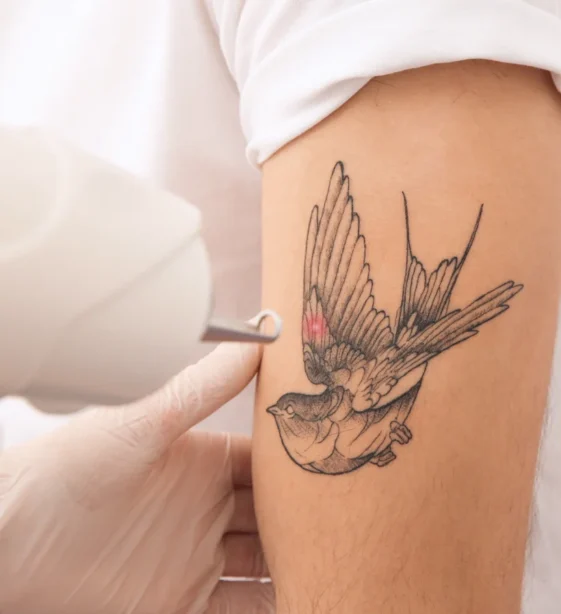
Tattoo ink particles are too large for your immune system to clear on its own. During treatment, the laser targets the ink pigment and breaks it into smaller pieces, which your immune system then naturally removes over time.
The number of treatments needed depends on several factors: the type and quality of ink, its color, how much was used, how deep it sits, its location on the body, your immune system, and the age and type of tattoo. We generally tell patients to expect five to 15 treatments, sometimes more. Our Quanta Q-Plus laser offers multiple wavelengths that can remove even historically difficult colors like light blue, green, and turquoise, and each pulse lasts as little as six billionths of a second, producing less heat and less impact on surrounding skin than older-generation lasers.
Although full removal cannot be guaranteed, we can fade many tattoos until they’re no longer visible to the naked eye, remove just a portion, or lighten a tattoo enough to give your tattoo artist a clean canvas for a cover-up.
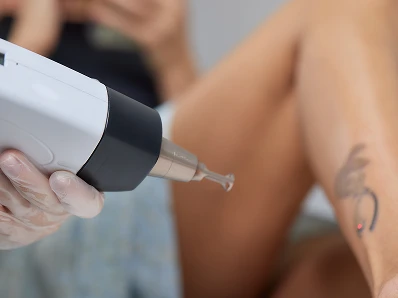
Sessions are typically spaced six to eight weeks apart, giving your skin time to heal and your body time to process the fragmented ink. This waiting period is essential to avoid skin damage and minimize scarring risk; some patients, especially those with larger tattoos, may need even longer between sessions. Black ink generally responds faster than brighter colors, since it absorbs laser energy more efficiently.
Tattoo removal is appropriate for most patients wanting to fade or fully remove unwanted ink. We do not perform tattoo removal during pregnancy, since your immune system needs to focus on your pregnancy rather than clearing ink.
1
We’ll evaluate your tattoo’s size, colors, and depth to estimate how many sessions you’ll need and what to expect.
2
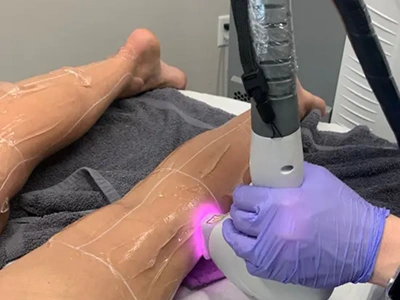
Each session is much faster than getting the tattoo itself, generally under 30 minutes, using cold air and ice packs to minimize discomfort.
3
The tattoo fades progressively with each session as your immune system clears the fragmented ink.
Your provider builds your treatment plan at your consultation based on your tattoo’s size, color, depth, and location. Topical over-the-counter lidocaine can be applied before your session.
You’ll feel a sensation similar to a rubber band snapping against the skin. We use cold air and ice packs throughout to reduce discomfort. Small black tattoos may take less than a minute; larger tattoos take longer, though we generally cap any single session at 30 minutes so your immune system isn’t overwhelmed.
The treated area may be sensitive to touch for a short time and can occasionally blister, though this resolves quickly. Over the following weeks, your immune system flushes away the fragmented ink, gradually fading the tattoo.
View results from Actual Patients
Removing a professionally applied tattoo typically takes five to 15 treatments. It can occasionally require more, depending on the ink’s quality, depth, color, and amount, as well as the tattoo’s location on your body.
Sessions are typically spaced six to eight weeks apart so your skin has time to heal and your immune system has time to clear the fragmented ink. Some patients, especially with larger tattoos, may need longer between sessions.
Your provider will build your treatment plan and pricing during your consultation, based on your tattoo’s specific characteristics.
It does hurt, though the pain is bearable, and each treatment is much faster than getting the original tattoo. Topical over-the-counter lidocaine can help reduce discomfort.
This depends on the tattoo’s size and colors. Small black tattoos may take less than a minute, while larger tattoos take longer, generally capped at 30 minutes per session.
The Quanta Q-Plus laser is designed to minimize that risk. If scarring already existed within the tattoo before treatment, it will remain visible afterward.
Yes, this is a common request for misspellings, wrong dates, or unwanted names within a larger design. The laser is precise, though a slight touch-up by your tattoo artist may be needed afterward.
Yes. We work closely with the tattoo artist handling your cover-up to give them as clean a canvas as possible, allowing them freedom with their new design.
No. We do not treat during pregnancy. Your health and your baby’s health come first.
Schedule a free consultation to get started.
Book your free consultation today.